
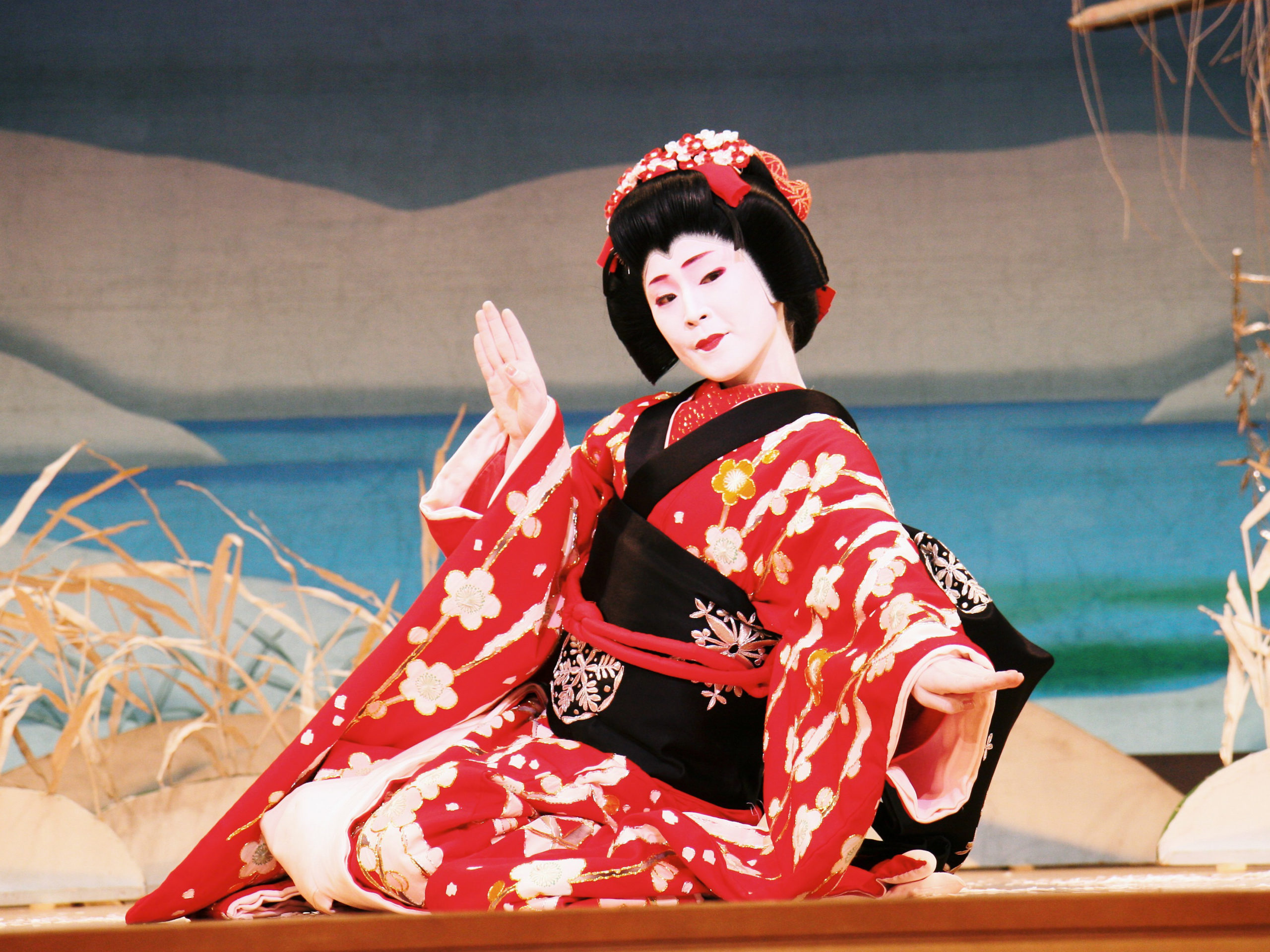
「鷺娘」と聞いても馴染みのない方も多いかもしれませんが、これは恋に悩む娘の姿を白鷺に見立てた舞踊です。
娘といえどもその恋の苦悩は妖艶で、現代人から見るとむしろ大人びて見える部分もあります。
あるいは恋に不慣れな娘だからこそ、ここまで苦しむのかもしれません。そうした心を読み取るのも、古典に触れる喜びの一つです。
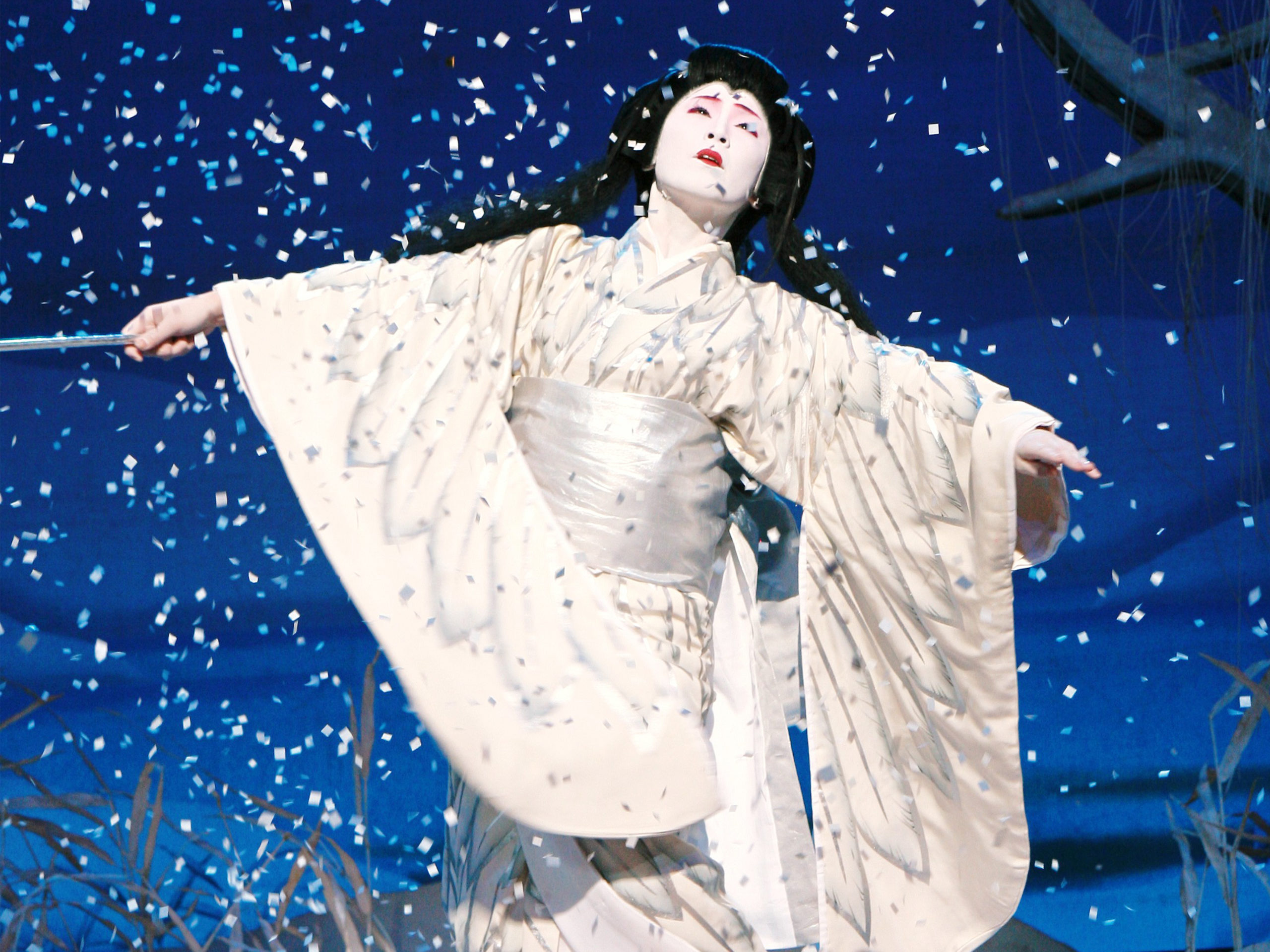
舞台は雪深い冬の景色。白無垢を纏った娘が、白鷺のように凛としつつも儚げにたたずむ姿から始まります。
幽玄の世界に心を奪われる瞬間です。
やがて場面は一転し、恋に弾む娘の愛らしい姿が描かれます。
しかし最後には恋の責め苦に苛まれ、地獄へと堕ちていく急展開。
なぜ恋する娘が地獄に落ちるのか、その謎が明かされないままなのも、この作品の魅力です。私は、恋に恋する娘の純粋さと激しさが、芸術的に極端に表現されたのではないかと感じています。
ラストシーンは、雪がしんしんと降る中で娘が苦しみ果てる場面。心震えるほど美しい場面ですが、実はこの結末は大正時代の逸話に由来しています。
名バレリーナ・アンナ・パブロワが日本で「瀕死の白鳥」を上演した際、それを見た八代目三津五郎が衝撃を受け、この「鷺娘」のラストを現在の形へと改めたと言われています。
異なる芸術から受けた感動をすぐに取り入れ、作品を進化させていく役者魂。
その柔軟さこそ、古典が時代を越えて愛され続ける理由なのだと改めて思います。
The piece portrays a young woman, tormented by love, symbolized as a white heron.
Though called a “maiden,” her suffering appears strikingly sensual — perhaps too mature for her years. Yet it may be precisely because she is inexperienced in love that her agony feels so intense.
The dance opens with an ethereal vision: a young woman in white bridal attire stands in a snowy landscape, graceful and fragile like a white heron. The atmosphere is profoundly haunting.
The mood then shifts, depicting her innocent joy in love. But in the final scene, she descends into torment, punished by the very passion she embraced. The abrupt fall into a hellish vision remains unexplained, adding to the work’s mystique.
The climax, where snow falls quietly as she collapses in anguish, is one of the most moving scenes in Nagauta dance. Interestingly, this finale is said to have been inspired by Anna Pavlova’s legendary performance of The Dying Swan, witnessed by the Kabuki actor Mitsugoro VIII in the early 20th century.
The willingness to absorb inspiration across cultures and reshape tradition exemplifies the vitality of Japanese performing arts.
It is through such evolution that masterpieces like Sagimusume remain beloved today.
長唄「鷺娘」 – Sagimusume
2008年4月
藤間啓與師匠の会にて初演
Nagauta “Sagimusume” – The Heron Maiden
April 2008
Performed at Master Hiroyo Fujima’s recital