
道成寺物にも複数のジャンルに作品があるように、黒髪もそれぞれの流派で演じられてきました。曲調が非常に似ているため、専門家の間では「どちらが先か」が議論されることもありますが、それは演奏家の先生方にお任せしたいと思います。
舞踊の観点から見ると、長唄の「黒髪」は物語の背景が明確に描かれているため、所作や動きに心情がはっきりと表れやすいと感じます。
主人公・辰姫の物語は特に興味深く、私も大好きなお話。友人にも語ることが多いのですが、多くの方(特に女性)が共感を示されます。
舞踊は「美しく動くもの」と思われがちですが、実際には一つひとつの所作に心情や情景が込められています。
その動きからお客様が何かを感じ取ってくださった時、舞台の上からも心が通じ合う瞬間を感じることができ、舞踊家として何とも言えない喜びに包まれます。
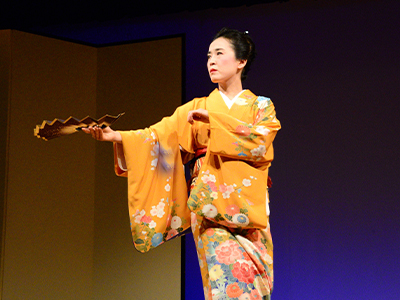
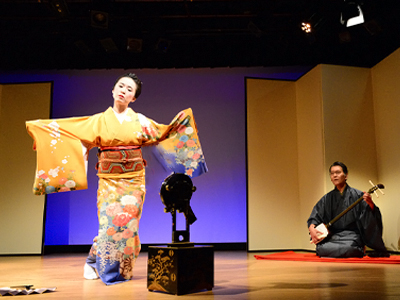
衣装は、以前「地歌黒髪」を舞った際に吉田幸三郎先生からお褒めいただいたものを再び使用しました。
今は専ら黒系の衣装が似合う年頃になってきましたが(笑)、それもまた「黒髪」という作品にふさわしいと感じています。
Much like the Dojoji repertoire, it has been interpreted across different genres. Because the melodies are so similar, specialists often debate which came first — a question I happily leave to the musicians.
From a dancer’s perspective, the Nagauta version offers a clearer dramatic background, allowing emotions to be expressed vividly through movement.
The story of Princess Tatsu, the central figure, is one of my favorites. When I share it with friends, I often find many — especially women — deeply relate to her emotions.
Dance is sometimes seen as merely graceful movement, yet in Nihon Buyo, every gesture carries meaning — an inner feeling, a fragment of scenery.
When the audience senses this, I feel an unspoken connection from the stage, a joy unlike any other.
For this performance, I wore the same costume I had used for Jiuta Kurokami, which had once been praised by Master Kozaburo Yoshida.
These days, darker costumes suit me well — a fitting match for Kurokami itself.
長唄「黒髪」 – Kurokami
2013年9月25日 「傳への会 その二」
メイシアター小ホール
舞踊:美華啓冶(現:ごん乃ゆい)
長唄:杵屋寛次郎
Nagauta “Kurokami” – Black Hair
September 25, 2013 – Tsutae no Kai, Vol.2
Meishia Theater Small Hall
Dance: Mika Keiji (now Yui Gonno)
Nagauta: Kanjiro Kineya