
「葦刈」– Ashikari
語り:花むらてん
舞踊:ごん乃ゆい
和太鼓:松下健命
物語と舞台
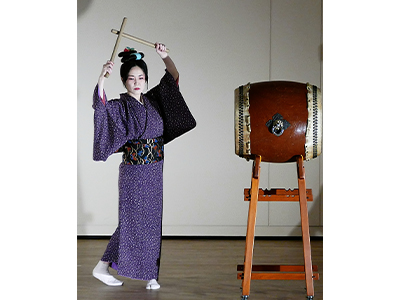
物語の終盤、妻が夫を失いながらも独りで生きる決意をする場面。
その力強さをどう表すか――私は初めて、和太鼓を打ちながら舞うことに挑みました。
太鼓を打ち、所作で心情を表し、また太鼓を鳴らす。
規則正しいリズムに自らの舞を重ねることで、「言葉を超えて生き抜く力」が伝わるよう願いました。
この挑戦は後に独立した作品「水火」へと発展し、繰り返し上演される私の大切なレパートリーとなりました。
Ashikari from the Konjaku Monogatari
This piece, based on the story Ashikari, combined narration, dance, and taiko drumming.
In the climactic scene, I challenged myself for the first time to dance while playing the taiko,
exploring how rhythm could expand the language of Nihon Buyo.
This experiment later gave birth to the independent taiko dance Suika (Water and Fire),
which has since become one of my most frequently performed works.
「舞茸」– Maitake
舞踊:ごん乃ゆい
和太鼓:松下健命
千里金蘭大学生徒有志
物語と舞台
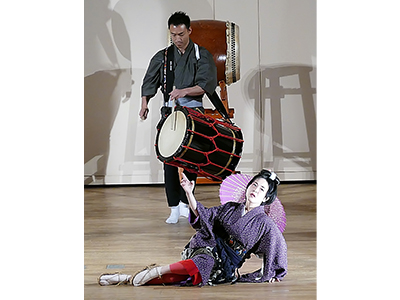
山で舞茸を見つけた女が、その美味しさに踊り狂う――。
シュールでユーモラスなエピソードを舞踊劇として表現しました。
音楽は和太鼓と木霊のみ。旋律のある音楽とは違い、太鼓のリズムだけで舞うのは初めての挑戦でしたが、
次第に太鼓の音階や響きの楽しさを感じ取るようになりました。
この日は地域の小学生を招いた公演。
舞台からも子どもたちの笑いや驚きが伝わり、共に物語を楽しむ温かな時間となりました。
Maitake from the Konjaku Monogatari
Based on the humorous tale Maitake, this piece was staged as a dance drama with only taiko and echoes.
It tells of a woman who, upon eating a mushroom so delicious, cannot help but dance madly.
Performed before local schoolchildren, their laughter and delight added a special joy to the stage.
今昔物語は、千年の時を超えて人間の心や営みを描き続けています。
「葦刈」と「舞茸」、二つの作品を通じて、強さとユーモア、そして舞踊の新たな可能性を探る舞台となりました。
Through Ashikari and Maitake, the timeless tales of the Konjaku Monogatari met Nihon Buyo and taiko,
revealing both resilience and humor on stage.